
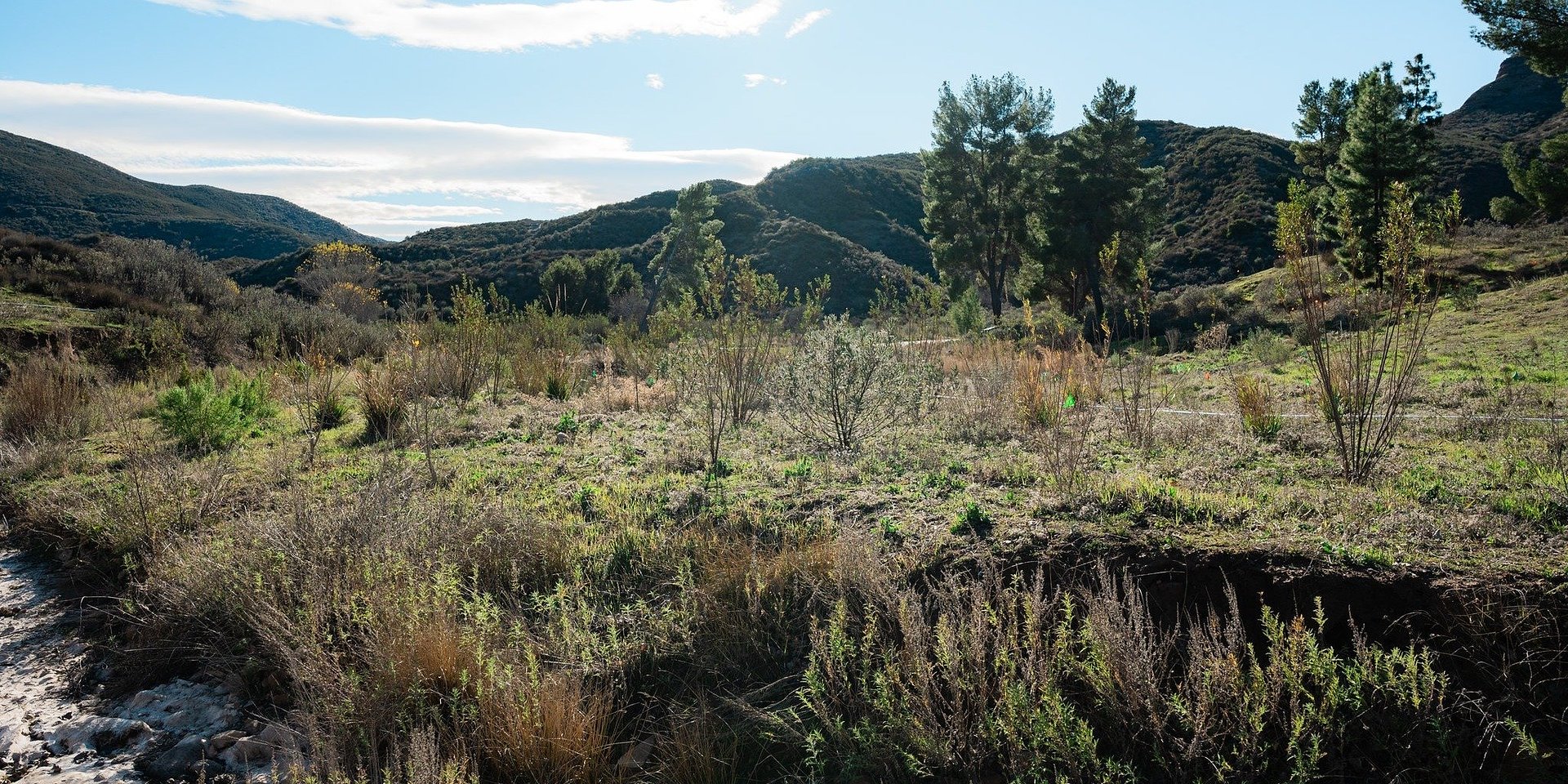
California’s 5th Climate Change Assessment delivers the region’s most detailed projection down to the neighborhood and street level
One thing is certain across all models: L.A. is going to get hotter. The climate assessment states that approximately 4°F (2°C) of warming has already occurred over the L.A. region since the beginning of the 20th century. Average temperatures are expected to rise by another 4°F (2°C) by mid-century.
The report's findings make it clear that mitigation and preparedness are key, and four challenges especially stand out.
One in five people in the L.A. region are energy-burdened, paying too high a share of income to cool and power their homes. Large populations in inland communities will likely bear the brunt of temperatures increasing at a greater rate.
- The average hottest day of the year is projected to exceed 115°F in inland areas by mid-century.
- San Bernardino is projected to see 120 days above 95°F, up from 81°F historically.
- The annual-maximum heat index in San Bernardino could climb from 141°F to 157°F.
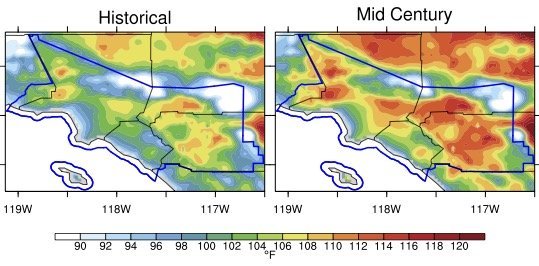
(Longitude) Hottest Day of the Year in the Los Angeles Region
Southern California is experiencing hotter, longer and more frequent heat waves in real time, which is why it is increasingly important to plant and care for our urban trees and ecosystems. We know that trees provide shade and cooling, among so many other benefits. California’s 5th Climate Change Assessment helps us to think strategically about where to invest our resources and prioritize communities that are experiencing the greatest impacts.
– Dr. Cassie Rauser, The Fielding Family CEO, TreePeople
Both very wet and dry years will become more frequent, and droughts will last longer. Imported water during dry years is expected to fall by 7%, and the region may lose about a third of its snowpack by mid-century. Together with increased precipitation variability, this creates major challenges both for flooding and reservoir water capture.
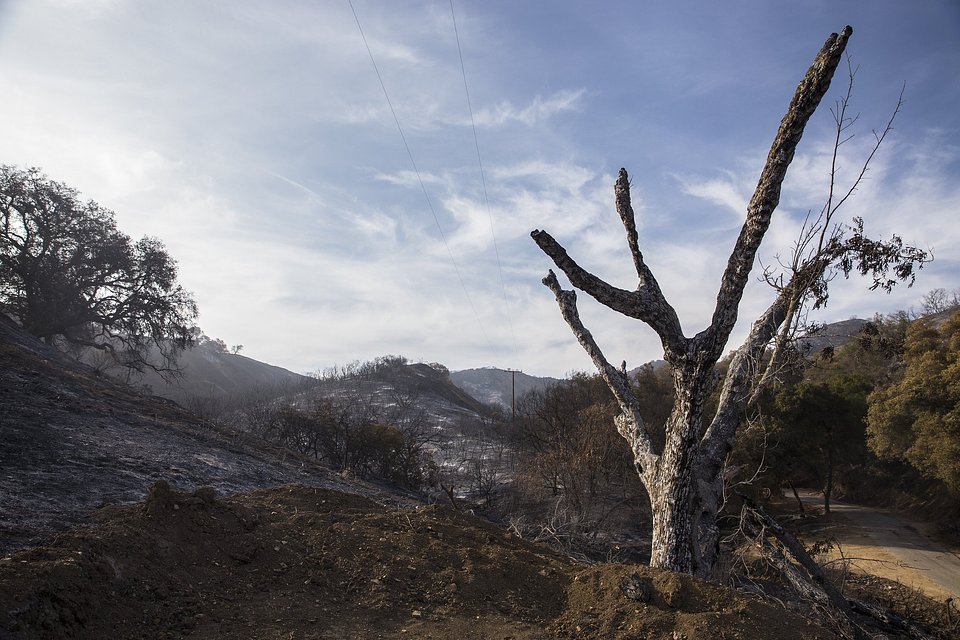
Calabasas Wildfire Aftermath | Photos by James Kellogg
The aforementioned wet years may also grow more vegetation and invasive species that can become fuel for wildfire. Assuming there are no changes in land management, annual burned area from wildfires may increase by 50% by midcentury. Historically, fire was considered a major risk for hillside communities. Yet, as we saw with the 2025 Eaton and Palisades fires, large urban populations are now both in direct danger and affected by compromised air quality.
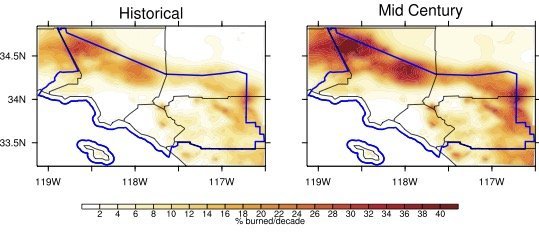
(Longitude) Increased Wildfires in the Los Angeles Region
– Dr. Zhiyun Li, Mercury Insurance Climate Economist, UCLA Anderson School of Management
Updated models project 0.7 to 1.1 feet of sea level rise along the L.A. coastline by 2050. New modeling shows that rising sea levels compound other current issues, such as high tide flooding, storm damage, coastal erosion and groundwater flooding. This puts Malibu, Venice and Marina del Rey, the ports, Belmont Shore and Seal Beach and Huntington Beach at particular risk of groundwater flooding. Combined with coastal surges, sea level rise threatens billions of dollars in roads, housing and other infrastructure.
– Dr. Juliette Finzi Hart, Director of Research, Thalassa Research Institute and report author.
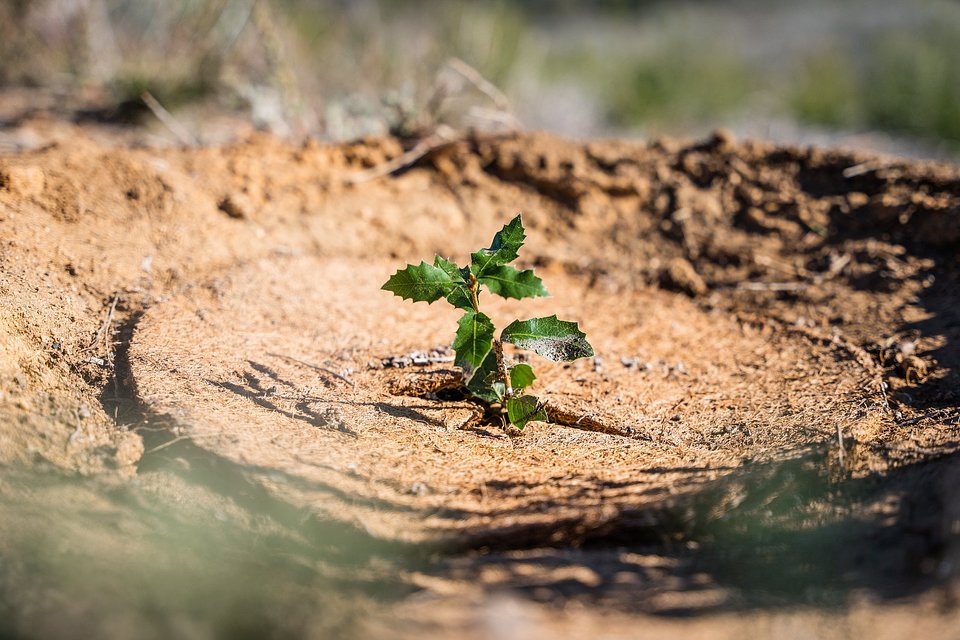
Native Plant Restoration | Photo by Adam Corey Thomas
Unlike past reports, the 5th report includes an entire chapter on current projects and strategies that cities, communities, and tribal groups are using to mitigate and adapt to a changing climate. Researchers also discuss possible future strategies in depth, making this report a useful tool and trove of ideas to keep Los Angeles moving forward.
- For Extreme Heat: Cool pavement, installing cool roofs, and increasing tree canopy, combined with increased public education and public cooling centers/resilience hubs.
- For Water Concerns: Water recycling, storm water capture, improved infrastructure built to handle volatile precipitation.
- For Wildfire: Power shutoffs, burying or fortifying power lines, managed land retreat, increased buffer zones, and home hardening. Tribes are revitalizing sustainable Indigenous stewardship practices to reduce the risk of major fires, including cultural burns and native plant restoration.
- For Sea Level Rise: Wetland restoration, levees and nature-based solutions like dunes and living shorelines.
– Dr. Jesse Norris, Research Scientist, Atmospheric and Oceanic Sciences, University of California Los Angeles
Founded in 1973 from the vision of a teenager determined to restore Los Angeles’ forests, TreePeople has grown into a regional leader in landscape restoration and environmental stewardship. Guided by the belief that trees need people and people need trees, TreePeople brings communities together to plant and care for trees in mountains, neighborhoods, schools, and parks – creating cooler streets, healthier ecosystems, and resilient communities across the region. With hundreds of thousands of volunteers engaged and millions of trees planted, TreePeople continues to grow solutions that help people and nature thrive together. Learn more at treepeople.org.
For more information and media inquiries, contact:
Kai McDaniel
Public Relations Specialist, TreePeople
kmcdaniel@treepeople.org
